
Boundary County VINELink Coverage
Idaho VINE is a free statewide custody notification service. It is run by the Idaho Sheriffs' Association with Appriss. The program plugs into participating jail booking systems. It also ties into the Idaho Department of Correction, according to official material. When the record you need is there, VINELink supports a name or offender-ID search. You can also register for release or transfer alerts.
One Boundary County caveat matters. No current official source says outright whether Boundary County Jail feeds its data to VINE. An older Idaho court handout claimed every county jail but one was connected. It never named the exception. So use the service. But treat a blank result as a prompt to check elsewhere, not as a final answer on an arrest.
The Idaho Sheriffs' Association VINE page details the state program. Remember its scope: it sends alerts. It is not a booking-photo gallery. It is not a full arrest history or a court record system.
Search Boundary Arrest Custody
Start at the national VINELink interface and pick Idaho. Search one specific person, not a broad group. Spelling slips, aliases, transfers, protected records, and fresh data entry can all block a match. When several records surface, compare identifiers rather than grabbing the first similar name.
- Open VINELink and select Idaho from the state list.
- Choose the person search and enter the full name or offender ID available to you.
- Review possible matches for identity, custody state, facility, and offender number. Do not rely on name alone.
- Open the matching record and note when the information was checked.
- If there is no reliable match, call BCSO at 208-267-3151 for Boundary County Jail custody confirmation.
The official VINELink state-selection screen is where the Idaho path begins.
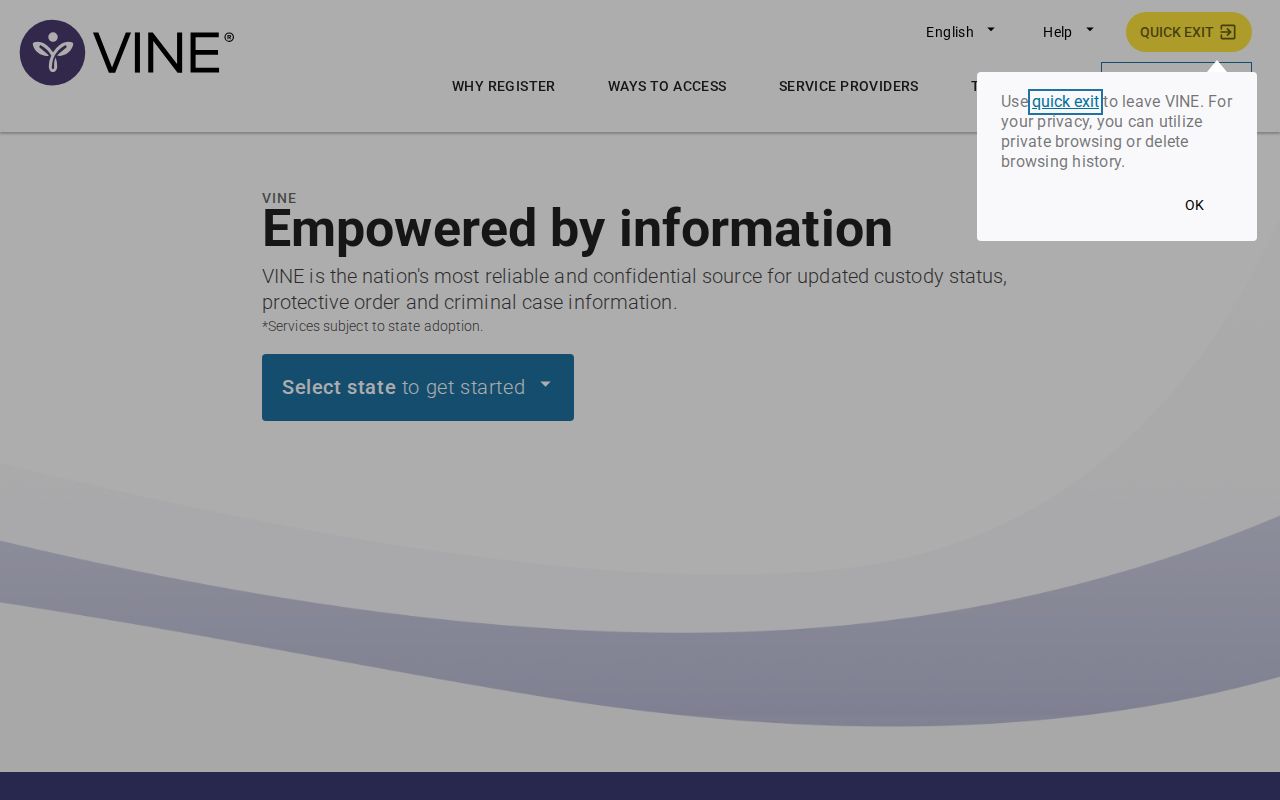
Choosing the right state matters. It keeps a Boundary County inquiry inside Idaho's deployed VINE system from the start.
VINELink answers a custody question when its data is present. Need a booking sheet or photo? That request goes to BCSO records. A filed case and its later outcome belong to Idaho iCourt. The Boundary County recent arrests hub sorts out those separate record paths.
Boundary VINELink Result Fields
Official Idaho material lists the fields a result may show when data and a match line up. No field is promised for every person. This list does not certify a live Boundary feed either.
| Potential result field | How to use it |
|---|---|
| Name and offender number | Compare identity and distinguish similar names. |
| Current custody status | Read as the status transmitted to VINE, then confirm urgent questions. |
| Location and facility phone | Identifies the reported holding agency and a direct contact route. |
| Scheduled release date | May appear when available; plans can change. |
| Victim-service information | Provides the registration or support options tied to the record. |
The statuses "in custody," "released," and "transferred" each describe a different situation. A transfer could mean a move from Boundary County Jail to another jail, to IDOC, or to some other authority. The booking record itself stays a county record apart from VINE.
Register Boundary Custody Alerts
Registration works only after you match a person record. Current Idaho sources describe phone and email options, and IDOC victim-services material also mentions text alerts. Follow whatever the live interface offers, since delivery methods can change. Each case number may need its own registration.
- Open the correct person record and choose the notification or registration control.
- Select the available release, transfer, or custody-change event and enter the requested phone or email details.
- Create and retain the four-digit PIN when registering by phone. The PIN confirms receipt and stops repeat calls.
- Complete any verification shown by the current interface and save the registration details.
- Register again if a new case or transfer creates a different record that is not covered by the first registration.
The Idaho person-search screen shows the starting point for a named custody query.
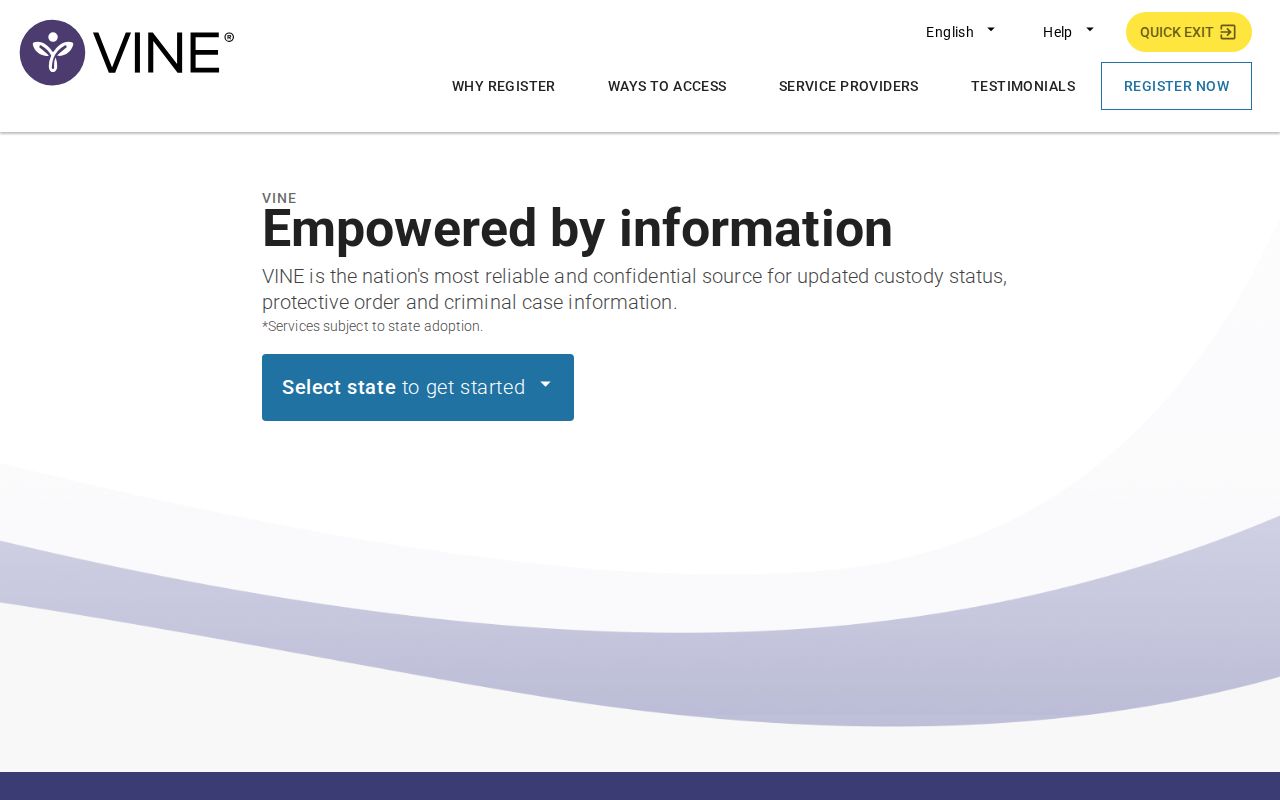
This search form covers one person at a time. Review any match closely before you register an alert.
IDOC says phone notifications can repeat every two hours. The repeats can run for up to 48 hours until a PIN is entered. That is a program mechanic, not a promise about Boundary County's reporting speed. For help, use the support number shown in the current VINELink or IDOC interface. Older Idaho materials list a different statewide hotline.
Confirm Boundary VINELink Results
VINE is only as good as the data a local jail enters. Idaho jail standards require coordinators, data-entry procedures, cross-checks, and an emergency override. Older official material described jail data transfers at roughly 15-minute intervals, though that statewide picture is no freshness guarantee for Boundary County.
A fresh arrest often comes before transport, finished booking, and data transfer. A no-result screen can also mean a misspelled name or a transfer. It can mean a protected record, too. Or it can simply reflect a local data gap. The Boundary County 24 Hour Arrests page maps the same-day phone and records chain. The county posts no web feed.
VINELink does not cover federal custody. The Federal Bureau of Prisons locator and the ICE Online Detainee Locator are separate systems. One handles federal holds, while the other covers immigration holds. IDOC's Resident/Client Search is distinct too. It tracks state custody, probation, parole, discharge, and some warrant status. It does not track a fresh county booking.
Custody Status Is Not Guilt
VINE answers one narrow question. Where is this person being held right now? The custody data comes straight from the participating agency, so it is not a court file. For filed charges and hearing dates, Idaho iCourt is the right tool. For a Boundary booking record or photograph, turn to BCSO records instead. The two systems can disagree on dates and terms. They simply track different stages of the same case.
The Boundary County Sheriff's Office runs the jail itself. Its records department and its public-record request route reach source documents that VINELink never supplies. A written request works best when it is specific. Name the booking sheet, the photograph, the daily jail log, or the release record. Include the full name, the date range, the agency, and the location.
State custody after sentencing calls for a different search. The Idaho Department of Correction Resident/Client Search is the official locator for that population. It lists no booking-photo field. Its results and VINE can cover the same person. They still are not interchangeable, so compare the record date, the agency, and the custody level before trusting either one.
Treat VINE notification as a backup. It is not an emergency warning system. When safety or current custody facts matter, call the jail or law enforcement directly. Keep the registered phone number and email current. A registration does not carry into a later case. If an alert conflicts with what the holding facility says, ask staff to confirm the present status and note the time of each check. That time stamp explains a release, a transfer, or a data update that landed between the two inquiries.
Note: Keep registration details private, and after a transfer, revisit the matching record, since a new case or facility can require another alert registration.